


Professional Wi-Fi Deployment for Offices: In today’s digital workplace, fast and reliable internet connectivity is no longer optional — it is essential. From cloud applications and VoIP calls to video conferencing and smart office systems, everything depends on a stable wireless network. Yet many offices still rely on basic routers that were never designed for high-density business environments.
So, why choose professional Wi-Fi deployment for offices?
Professional Wi-Fi deployment ensures optimized coverage, enterprise-level security, seamless connectivity, and scalable performance designed specifically for business operations. Unlike DIY router setups, professional deployment involves site surveys, network planning, enterprise hardware, and advanced configuration tailored to your office layout and user load.
If your office experiences slow speeds, dead zones, dropped video calls, or network congestion, this guide will explain why investing in professional Wi-Fi infrastructure is a smart long-term decision.
What Is Professional Wi-Fi Deployment?
Professional Wi-Fi deployment is a structured, engineered approach to designing and installing a business-grade wireless network. It goes far beyond plugging in a router.
Instead of relying on a single device placed randomly in a corner, professional deployment includes:
- Detailed site survey
- Heat mapping and signal analysis
- Strategic access point placement
- Channel and frequency optimization
- Bandwidth allocation planning
- Security configuration
- Ongoing monitoring and management
The goal is to create a seamless wireless ecosystem where users can move around the office without losing connection, and where performance remains stable even during peak usage.
Professional Wi-Fi systems typically use enterprise-grade access points (APs), Power over Ethernet (PoE) switches, controllers, and firewall integration. These components work together to provide centralized control, advanced security, and optimized performance.
Unlike home routers, business Wi-Fi infrastructure is built to handle:
- High device density
- Large file transfers
- Continuous cloud usage
- Video conferencing traffic
- IoT devices
In simple terms, professional Wi-Fi deployment transforms your office network from a basic connectivity tool into a scalable digital backbone.
Common Problems with Basic Office Wi-Fi Setup
Many offices underestimate the limitations of consumer-grade routers. While they may work for small home environments, they struggle in business settings.
1. Dead Zones
Large office layouts, glass partitions, concrete walls, and metal structures block signals. Without proper planning, some areas experience weak or no connectivity.
2. Network Congestion
When multiple employees connect laptops, phones, tablets, printers, and IoT devices to one router, bandwidth becomes overloaded. This results in slow speeds and buffering.
3. Security Vulnerabilities
Basic routers lack enterprise-grade security features such as VLAN segmentation, advanced firewall policies, and secure authentication protocols.
4. Poor Roaming Experience
Employees moving between meeting rooms may experience dropped connections because basic routers do not support seamless roaming.
5. Limited Scalability
As the business grows, adding more devices often requires replacing the entire setup rather than expanding strategically.
These issues directly impact productivity, employee satisfaction, and business operations.
Why Choose Professional Wi-Fi Deployment for Offices?
Here is the direct answer:
Professional Wi-Fi deployment provides optimized coverage, high performance under heavy load, enterprise-level security, seamless roaming, scalability, and centralized network control tailored specifically for business environments.
Let’s explore these benefits in detail.
Optimized Coverage and Signal Strength
Professional deployment begins with a site survey and heat mapping analysis. This ensures access points are placed in optimal positions to eliminate dead zones.
Instead of relying on signal guesswork, network engineers analyze:
- Building materials
- Office layout
- Device density
- Interference sources
The result is uniform coverage across all departments, meeting rooms, reception areas, and workstations.
Better Performance Under High User Load
Offices often have dozens or even hundreds of connected devices. Enterprise access points are designed to handle simultaneous high traffic without degrading performance.
Features include:
- Band steering
- Load balancing
- Multi-user MIMO
- Dual-band and tri-band support
This ensures smooth video conferencing, fast cloud application access, and uninterrupted collaboration.
Enterprise-Level Security
Security is one of the strongest reasons to choose professional Wi-Fi deployment.
Business-grade systems offer:
- WPA3 encryption
- VLAN segmentation
- Guest network isolation
- Firewall integration
- Intrusion detection
These features protect sensitive business data and reduce the risk of cyber threats.
Seamless Roaming Across the Office
In large office spaces, employees move between rooms frequently. Professional systems enable seamless roaming, meaning devices automatically switch to the nearest access point without disconnecting.
This is critical for:
- VoIP calls
- Video meetings
- Warehouse scanning systems
- Mobile workstations
Scalability for Future Growth
Professional Wi-Fi networks are designed with future expansion in mind. Adding new employees or expanding office space does not require replacing the entire system. Instead, additional access points can be integrated seamlessly.
This protects your investment long term.
Centralized Monitoring and Management
Enterprise systems allow IT teams to monitor network performance in real time. Administrators can:
- Track bandwidth usage
- Identify bottlenecks
- Detect unauthorized devices
- Apply security updates remotely
This proactive approach minimizes downtime.
Key Components of a Professional Office Wi-Fi System

A complete professional Wi-Fi deployment typically includes:
Enterprise Access Points
These devices distribute wireless signals efficiently across the office.
PoE Switches
Power access points directly through Ethernet cables, reducing clutter.
Network Controller
Manages all access points from a central dashboard.
Firewall Integration
Protects the network from external threats.
Structured Cabling Infrastructure
Ensures stable wired backbone connectivity supporting the wireless system.
Each component works together to provide reliability, performance, and security.
Business Benefits of Professional Wi-Fi Deployment
Choosing professional deployment impacts business operations positively.
Increased Employee Productivity
Stable internet reduces interruptions and improves workflow efficiency.
Improved Collaboration
High-quality video conferencing and cloud access enhance team communication.
Reduced IT Support Issues
Proper configuration lowers troubleshooting frequency.
Support for Smart Office Technologies
IoT devices, smart lighting, and security systems operate smoothly.
Long-Term Cost Savings
While initial investment is higher, reduced downtime and maintenance costs result in strong ROI.
Professional Wi-Fi Deployment vs Standard Router Setup
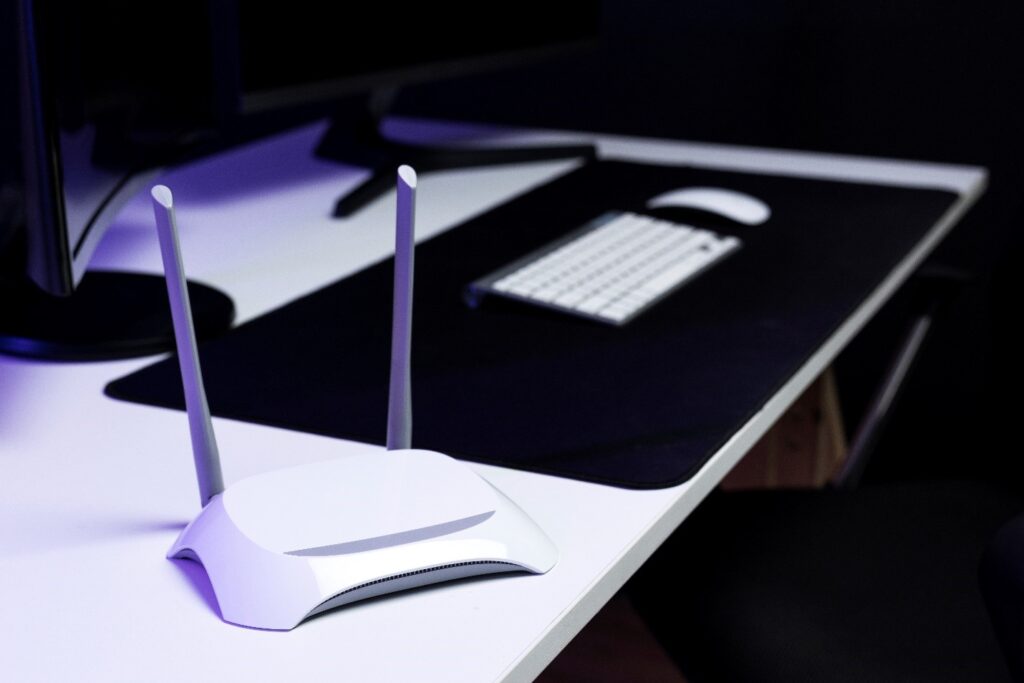
| Feature | Professional Deployment | Basic Router |
| Coverage | Optimized via site survey | Random placement |
| Security | Enterprise-grade | Basic |
| Scalability | Expandable | Limited |
| Monitoring | Centralized | Minimal |
| Performance | High-density ready | Performance drops |
This comparison clearly shows why businesses choose professional systems.
Deployment Process Overview
- Site assessment
- Network design planning
- Hardware selection
- Installation
- Configuration
- Testing and optimization
- Ongoing monitoring
Each step ensures reliability and performance.
Conclusion: Professional Wi-Fi Deployment for Offices
Why choose professional Wi-Fi deployment for offices?
Because your business depends on connectivity. Professional deployment delivers reliable performance, strong security, seamless coverage, and scalability that basic routers simply cannot provide.
In a modern office environment driven by cloud computing and digital collaboration, investing in professional Wi-Fi is not a luxury — it is a necessity.
If your office struggles with connectivity issues, a professional Wi-Fi assessment could transform your entire workflow.